Skip to content
Global Sales Academy, The Future of Selling
AI in Sales & Future of Selling

AI Training for Sales Teams in Singapore: How to Build an AI-Ready Sales Organisation

Published on 23 November 2026By Dr Jerome Joseph
AI Training for Sales Teams in Singapore: How to Build an AI-Ready Sales Organisation

Why Sales Teams Need AI Training in Singapore

Artificial intelligence is changing the way businesses approach customers, manage opportunities and develop commercial relationships. Tasks that once required hours of manual research, preparation and administration can now be supported by AI-powered tools.

Sales professionals can use AI to research potential customers, prepare personalised communication, develop presentation outlines, practise objection handling and organise follow-up activities.

For businesses in Singapore, these capabilities are becoming increasingly relevant. Companies are exploring AI to improve productivity, strengthen customer engagement and remain competitive in changing markets.

However, adopting technology is only one part of the transformation.

The real challenge is helping salespeople understand how to use AI effectively in their everyday work.

A company can introduce AI subscriptions, provide access to generative AI platforms and encourage employees to experiment with new tools. Yet, without practical training, sales professionals may struggle to identify the right applications, verify AI-generated information or translate technology into better customer conversations.

This creates an important distinction between an organisation that uses AI tools and one that has developed an AI-ready sales team.

An AI-ready sales organisation understands where technology adds value, where human judgement remains essential and how both can work together throughout the customer journey.

For sales leaders, CEOs, HR directors and Learning and Development decision-makers, the priority should be to move beyond tool adoption and develop practical AI capabilities across the sales function.

Organisations exploring this transition can also discover Global Sales Academy's sales training programmes, including programmes designed to connect human selling skills with practical AI applications.

What Is AI Training for Sales Teams?

AI training for sales teams is a structured learning approach that helps sales professionals and managers apply artificial intelligence to real commercial activities.

It focuses on developing the knowledge, practical skills and judgement required to use AI responsibly and effectively throughout the sales process.

Rather than teaching employees how to operate individual AI platforms alone, effective AI sales training connects technology with the activities that influence customer engagement and commercial decisions.

These activities include:

  • Researching potential customers and target accounts.

  • Identifying relevant business opportunities.

  • Preparing personalised prospecting messages.

  • Understanding customer needs and industry challenges.

  • Preparing discovery questions and meeting plans.

  • Developing customer-focused presentations.

  • Practising responses to objections.

  • Preparing for commercial negotiations.

  • Creating relevant follow-up communications.

  • Identifying opportunities to strengthen existing customer relationships.

The objective is not to make AI responsible for selling.

It is to help sales professionals become more informed, prepared and effective by using AI as a practical support tool while retaining responsibility for customer relationships and commercial decisions.

Businesses that want to connect these capabilities with their existing sales processes can explore customised sales enablement solutions, where training, sales methodologies and practical workflows can be aligned with organisational requirements.

Why AI Adoption Alone Does Not Create an AI-Ready Sales Team

AI Adoption Alone Does Not Create an AI-Ready Sales Team

Many organisations approach AI adoption by introducing software and expecting employees to discover how it fits into their work.

However, access to technology does not automatically create capability.

Consider a salesperson who uses an AI assistant to research a potential customer. The tool produces a detailed summary of the company's industry, challenges and possible business priorities.

The salesperson still needs to determine whether the information is accurate, identify which insights are commercially relevant and decide how to use them in a conversation.

Without those skills, AI may simply produce more information without improving the quality of the salesperson's decisions.

There are several common challenges.

1. Employees do not know where to start

Sales professionals may understand basic AI tools but struggle to identify useful applications for their specific responsibilities.

2. AI-generated information is not always reliable

AI can produce incorrect, outdated or incomplete information. Salespeople must learn how to verify important facts before using them with customers.

3. Technology is disconnected from existing sales processes

When AI activities are not connected to CRM systems, sales methodologies and everyday workflows, employees may find it difficult to use them consistently.

4. Personalisation becomes generic

Using AI to generate large quantities of outreach messages does not guarantee relevance. Messages still need to reflect the customer's business situation and priorities.

5. Managers struggle to reinforce new behaviours

A one-time training session may introduce useful ideas, but managers need to reinforce practical application through coaching, feedback and regular sales reviews.

This is why organisations should first identify their existing capability gaps. A structured sales skill gap analysis can help managers determine whether employees need stronger research, communication, discovery or negotiation skills before introducing new AI workflows.

The solution is to build AI capability around the way the organisation actually sells, rather than treating AI as a separate technology subject.

Help your sales team use AI confidently to find prospects, engage customers and improve sales performance.

Why AI Training Is Becoming Important for Singapore Sales Organisations

Singapore's business environment provides a strong reason for sales leaders to take AI capability development seriously.

AI Training Is Becoming Important for Singapore Sales Organisations

According to Singapore's Infocomm Media Development Authority (IMDA) Singapore Digital Economy Report 2025, Business Development and Sales accounted for 34% of reported AI use among firms already using AI.

This finding demonstrates that AI is being applied to commercial activities, although adoption and maturity vary between organisations.

Salesforce's February 2026 State of Sales research also provides useful insight into the changing sales environment in Singapore.

Its research covered 4,050 sales professionals globally, including 100 respondents in Singapore. The Singapore findings reported that:

  • 80% of Singapore sales organisations use some form of AI.

  • 50% of Singapore sellers had used AI agents.

  • 44% planned to use AI agents by 2027.

  • 71% said they lacked sufficient bandwidth for adequate cold outreach.

  • 64% of sales leaders using AI said disconnected systems were slowing their AI initiatives.

These findings highlight two important priorities for sales organisations: developing employee capabilities and creating the right conditions for AI to support everyday sales activities.

AI training should therefore address more than software familiarity. It should help salespeople understand how to use AI in ways that improve preparation, relevance and customer engagement.

Sources:

Five Areas Where Sales Teams Can Apply AI

AI can support different stages of the sales process. The most valuable applications depend on the organisation's customers, sales cycle, existing technology and commercial priorities. Here are five important areas where sales teams can develop practical AI capabilities.

1. AI for Prospecting and Account Research

Prospecting requires salespeople to identify relevant opportunities and understand potential customers before making contact.

AI can support this process by helping professionals:

  • Organise publicly available company information.

  • Summarise industry developments.

  • Identify potential customer challenges.

  • Prepare account research summaries.

  • Develop relevant outreach ideas.

  • Adapt communication for different customer segments.

For example, before approaching a manufacturing company, a salesperson might use an approved AI tool to organise publicly available information about its business model, product categories and market environment. The salesperson can then use those insights to prepare more relevant questions and communication.

However, AI-generated research must be checked against reliable sources. A salesperson should never assume that a generated company fact or business challenge is accurate simply because it sounds convincing. This is also why personalisation matters. The purpose of AI prospecting is not to send more generic messages. It is to help sales professionals understand potential customers and communicate with greater relevance.

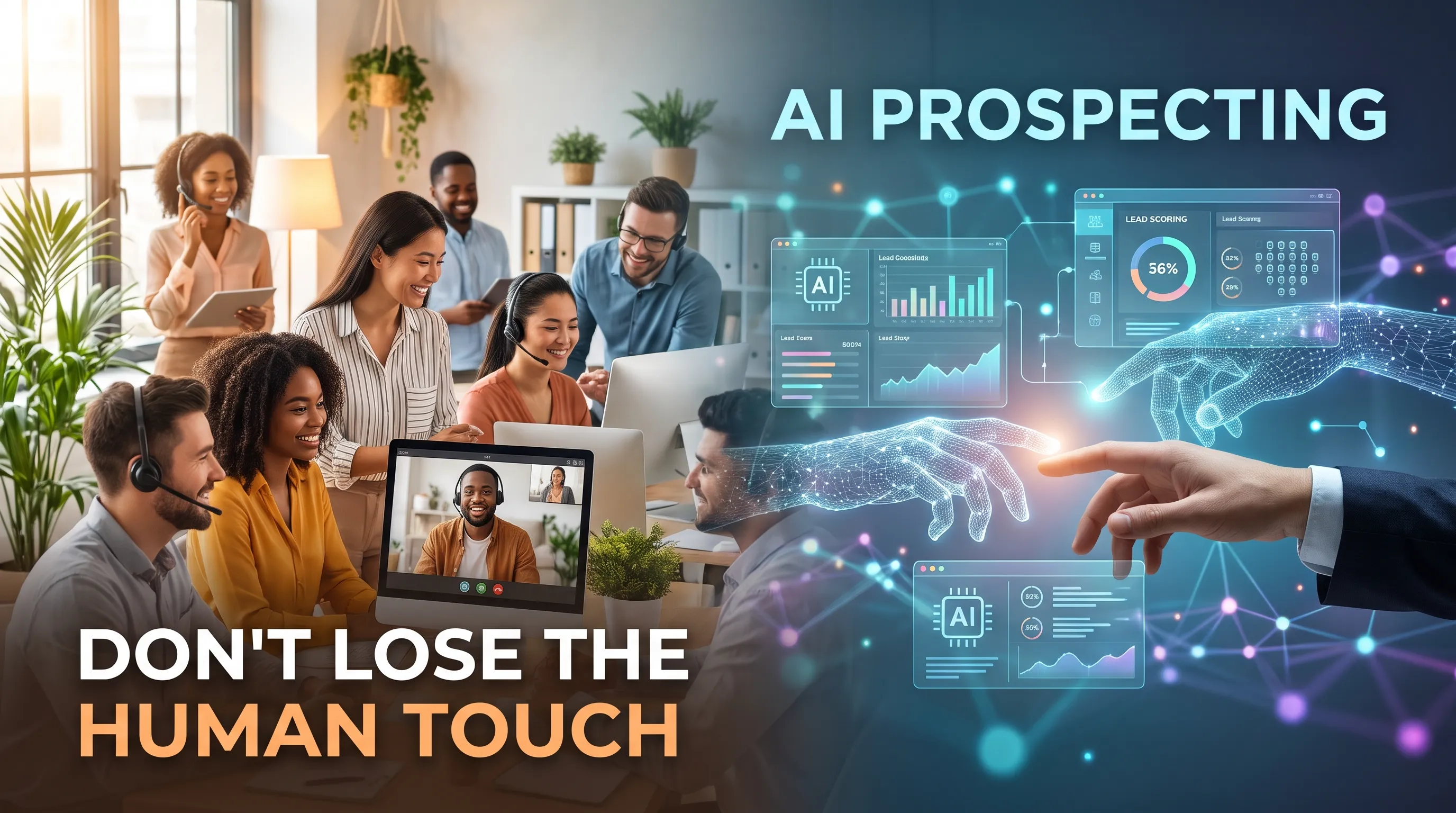
For more practical guidance, read AI Prospecting for Sales Teams: Don't Lose the Human Touch.

Organisations looking to develop this capability through structured learning can also explore Prospecting in the Age of AI™, which combines prospecting principles with AI-powered intelligence and personalisation.

2. AI for Customer Understanding and Discovery

Successful selling requires more than presenting products and services. Salespeople must understand what customers are trying to achieve, what challenges they face and how they evaluate potential solutions.

AI can help sales professionals prepare for discovery conversations by:

  • Developing questions based on publicly available account information.

  • Organising customer research.

  • Preparing stakeholder discussion points.

  • Identifying possible areas for further investigation.

  • Structuring meeting preparation notes.

  • Reviewing approved conversation transcripts for learning purposes.

For example, a salesperson preparing for a meeting with a financial services organisation might use AI to organise research around operational priorities, customer experience challenges and relevant industry developments.

This preparation can help the salesperson ask more thoughtful questions. However, AI should not decide what a customer needs. The salesperson must listen, investigate and confirm the customer's actual priorities. This connects directly with consultative selling, where understanding the customer comes before recommending a solution.

Related reading: How to Train a B2B Sales Team to Sell Consultatively.

Companies wanting to strengthen this capability can explore Consultative Solution Selling™, which focuses on customer discovery, understanding needs and connecting solutions to business priorities.

3. AI for Sales Presentations and Value Communication

A common sales challenge is explaining a solution in a way that connects with the customer's business priorities.

AI for Sales Presentations and Value Communication

AI can support presentation preparation by helping sales professionals:

  • Organise presentation structures.

  • Simplify complex information.

  • Develop customer-focused explanations.

  • Improve the clarity of written communication.

  • Generate alternative ways to communicate value.

  • Prepare relevant examples for different stakeholders.

For instance, the same solution may need to be presented differently to a finance director, operations leader and business owner. AI can help salespeople explore different communication approaches. However, the salesperson must ensure that every claim, benefit and business outcome is accurate and supported.

The final presentation should demonstrate a clear understanding of the customer's situation rather than simply contain more information.

4. AI for Objection Handling and Negotiation Preparation

Objections and negotiations are important moments in the sales process. Customers may question pricing, compare competing solutions, raise implementation concerns or request additional commercial concessions.

AI can support preparation by helping sales professionals:

  • Practise responses to common objections.

  • Explore different negotiation scenarios.

  • Identify questions that uncover customer concerns.

  • Structure responses around business value.

  • Prepare for difficult stakeholder conversations.

  • Review negotiation approaches after a meeting.

For example, a salesperson facing a price objection can use an approved AI tool to practise several possible responses. The purpose is not to memorise AI-generated scripts. It is to improve the salesperson's ability to understand the concern, communicate value and respond confidently.

This is particularly relevant when teams discount too early without fully understanding what is driving the customer's objection.

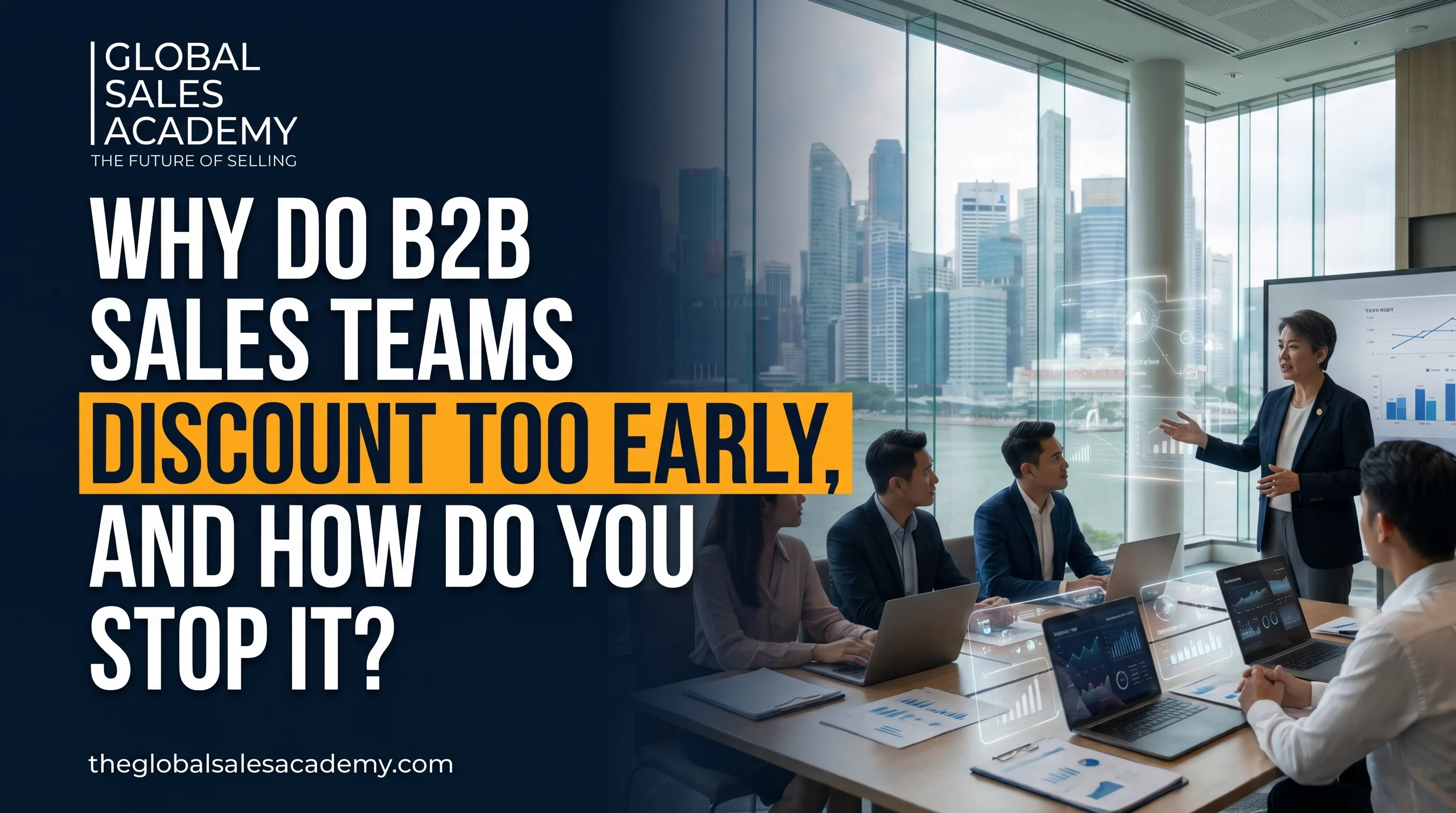
Read: Why Do B2B Sales Teams Discount Too Early, and How Do You Stop It?. Sales teams wanting to strengthen negotiation capability can also explore Powerful Negotiations™, which focuses on managing pressure, protecting commercial value and creating stronger agreements.

5. AI for Follow-Up and Account Growth

The sales process does not end when a customer agrees to purchase. Sales professionals must maintain communication, support customer relationships and identify opportunities for continued value creation.

AI can help with:

  • Structuring follow-up messages.

  • Organising meeting notes.

  • Preparing account review questions.

  • Summarising approved customer information.

  • Identifying potential relationship-development opportunities.

  • Creating draft action plans.

For example, after a customer meeting, a salesperson can use an approved AI workflow to organise their notes into key discussion points, outstanding questions and agreed next steps. The salesperson should review the summary before updating CRM records or communicating commitments to the customer.

AI should support better continuity, not replace relationship ownership.

The Five-Stage Framework for AI-Ready Selling

A useful way to integrate AI into sales training is to connect it with the complete customer journey. Global Sales Academy's Sales Mastery Framework™ follows five stages: Attract, Diagnose, Influence, Commit and Grow.

This provides a practical structure for considering where AI can support sales professionals without losing the importance of human judgement.

Sales stage

Main objective

Potential AI applications

Attract

Create opportunities and build credibility

Account research, prospect identification, outreach preparation

Diagnose

Understand customer needs

Meeting preparation, discovery questions, research summaries

Influence

Communicate value and build belief

Presentation preparation, message development, value communication

Commit

Advance opportunities and secure decisions

Objection practice, negotiation preparation, follow-up planning

Grow

Strengthen relationships and customer value

Account reviews, customer research, relationship planning

Attract: Create Better Opportunities

AI can help salespeople research accounts, understand market developments and prepare relevant prospecting approaches. The human responsibility is to decide which opportunities are worth pursuing and how to establish genuine relevance.

Diagnose: Understand Before Recommending

AI can support meeting preparation and the organisation of customer insights. However, listening, asking meaningful questions and understanding the customer's real priorities remain essential sales skills.

Influence: Communicate Value Clearly

AI can help salespeople structure presentations and develop customer-focused messages. The salesperson remains responsible for explaining the solution accurately and establishing confidence.

Commit: Move From Interest to Action

AI can help prepare for objections, commercial discussions and negotiations. The salesperson must use judgement to navigate concerns, protect value and agree on appropriate next steps.

Grow: Develop Long-Term Customer Relationships

AI can help organise account information and prepare relationship reviews. Sales professionals must continue to build trust, identify opportunities and deliver meaningful customer value. Explore the Global Sales Academy Sales Mastery Framework™ to understand how these five stages connect across the customer journey.

AI Tools Versus AI Sales Capability: What Should Companies Invest In?

Purchasing AI software and developing AI sales capability are two different decisions. An organisation may provide access to several AI platforms, but employees still need to know which tasks to use them for, how to verify outputs and how to apply the results.

Area

Tool-focused adoption

Capability-focused training

Prospecting

Access to AI writing tools

Research, qualification and relevant outreach

Customer discovery

AI-generated questions

Better questioning and active listening

Presentations

Automated content generation

Customer-focused value communication

Negotiation

AI-generated response suggestions

Commercial judgement and negotiation preparation

Follow-up

Automated message drafts

Relevant communication and clear commitments

Management

AI dashboards

Coaching, feedback and behaviour reinforcement

The strongest approach connects both investments. Technology provides capabilities, while training helps people understand when and how to use them. For a broader view of how organisations can develop consistent sales capabilities, explore Global Sales Academy's sales training programmes.

What Should an AI Sales Training Programme Include?

AI Sales Training Programme Include

An effective programme should be built around the organisation's sales responsibilities and commercial environment. The following areas provide a practical starting point.

1. AI fundamentals for sales professionals

Employees should understand what generative AI can do, where it may produce unreliable information and what limitations they need to recognise.

2. Practical AI applications

Training should demonstrate relevant workflows for research, prospecting, customer preparation, presentations, objections and follow-up.

3. Prompting and communication skills

Sales professionals need to learn how to provide clear context, define objectives and evaluate the usefulness of AI-generated responses.

4. Responsible AI use

Employees should understand confidentiality, customer data protection, approved tools, human review and organisational policies.

5. Sales methodology integration

AI activities should connect with the organisation's existing sales methodology rather than operate as unrelated tasks.

6. Practical exercises and role-play

Participants should practise using AI in realistic sales situations, review their outputs and understand how to improve their decisions.

7. Manager coaching and reinforcement

Sales leaders should be equipped to reinforce learning, review application and identify where additional support is required.

A programme that combines these areas can help organisations move from basic experimentation towards more consistent workplace application.


Build a customised sales training programme tailored to your team, customers and business goals.

How to Build an AI-Ready Sales Organisation: A Practical Implementation Plan

Introducing AI across a sales department requires more than organising a workshop. Organisations need a clear implementation approach that connects learning with existing processes and business priorities.

Here is a practical five-step approach.

Step 1: Assess Current Sales Capabilities

Begin by understanding how the sales team currently works.

Identify:

  • The activities consuming the most time.

  • Common prospecting and customer engagement challenges.

  • Existing sales skill gaps.

  • Current AI usage across different roles.

  • Areas where employees lack confidence.

  • Existing CRM and sales technology limitations.

A sales capability assessment helps identify where AI training can provide meaningful value. It also prevents organisations from introducing tools that do not address an actual business problem.

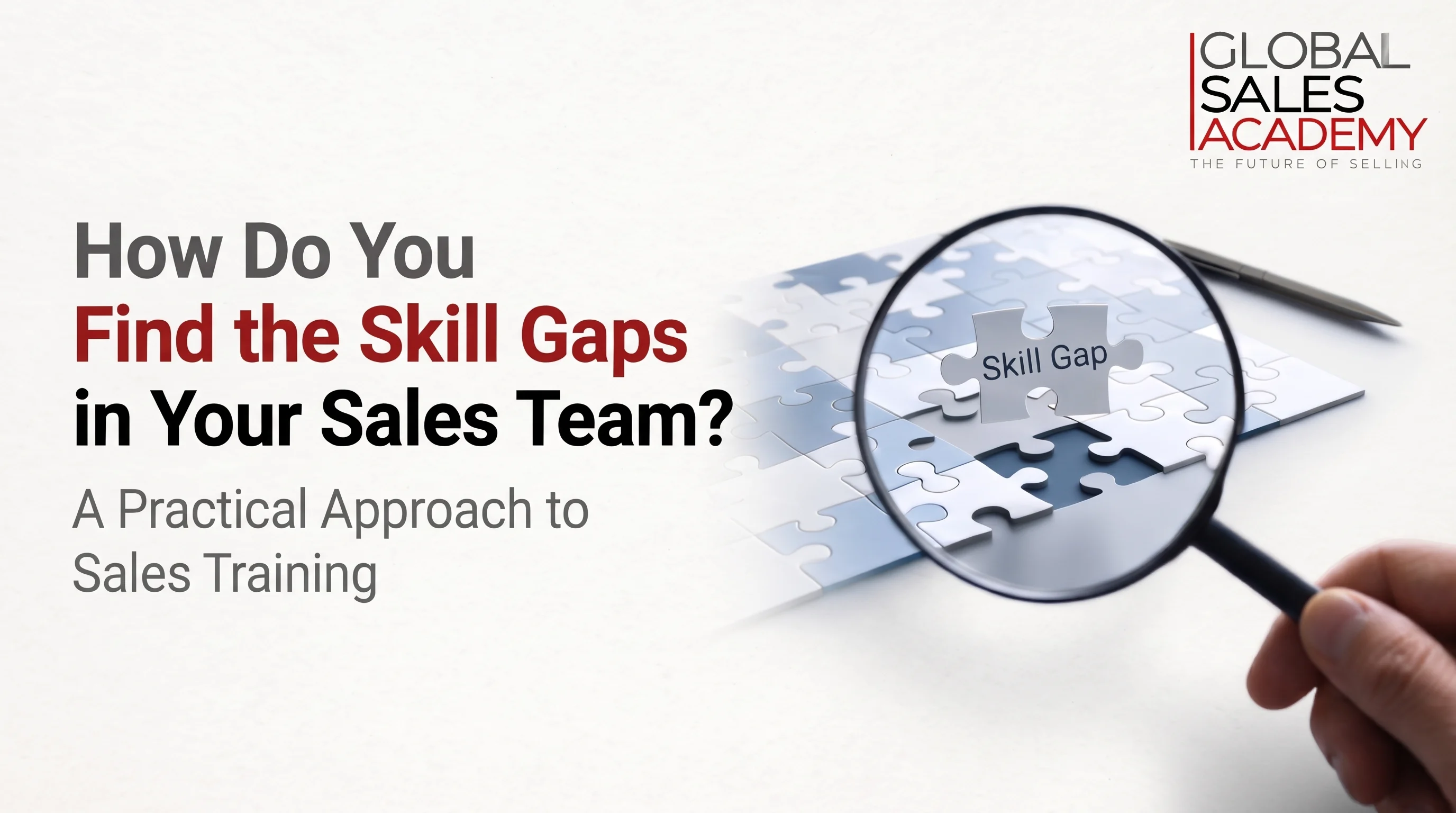
For a more structured approach, read How Do You Find the Skill Gaps in Your Sales Team?.

Step 2: Identify High-Value AI Use Cases

Not every sales activity needs to be automated or supported by AI. Prioritise applications that address genuine workflow challenges.

For example:

Sales challenge

Potential AI application

Human responsibility

Time-consuming account research

Organise public information

Verify relevance and accuracy

Generic outreach

Prepare personalised message drafts

Confirm customer context

Difficult meeting preparation

Generate discovery question ideas

Select and adapt questions

Presentation development

Structure content and messaging

Validate business claims

Objection handling

Practise possible scenarios

Respond to the actual customer

Inconsistent follow-up

Organise meeting summaries and next steps

Confirm commitments

Start with a manageable number of use cases, evaluate their usefulness and expand gradually.

Step 3: Deliver Practical AI Sales Training

Training should be interactive and connected to real sales responsibilities. Rather than spending the entire session explaining AI concepts, participants should practise applying AI to relevant commercial situations.

For example, a training exercise might ask participants to:

  1. Select an appropriate customer scenario.

  2. Research the organisation using approved sources.

  3. Prepare a relevant outreach approach.

  4. Develop discovery questions.

  5. Create a customer-focused presentation outline.

  6. Practise responding to an objection.

  7. Prepare a follow-up communication.

This gives employees an opportunity to understand how AI can support different stages of selling. The exercises should also highlight where AI outputs need human verification and improvement.

Step 4: Equip Sales Managers to Reinforce Learning

Sales managers play an important role in turning training into everyday behaviour.

They should understand how to:

  • Discuss AI use during sales reviews.

  • Review the quality of AI-assisted preparation.

  • Coach employees on customer relevance.

  • Identify incorrect or unsuitable AI-generated information.

  • Encourage responsible experimentation.

  • Share useful workflows across the team.

Managers should focus on the quality of sales activities rather than simply counting how often employees use AI.

Training and coaching should work together. As explained in Sales Coaching or Sales Training? What Singapore Teams Need, training develops shared skills, while coaching helps employees apply those skills in actual selling situations.

Step 5: Measure Application and Business Outcomes

Organisations should define what successful AI training looks like before implementation.

Possible measurement areas include:

Adoption and capability

  • Percentage of employees completing practical exercises.

  • Confidence in using approved AI tools.

  • Frequency of relevant AI workflow application.

  • Manager assessment of demonstrated skills.

Sales activity quality

  • Quality of account research.

  • Relevance of prospecting messages.

  • Preparation for customer meetings.

  • Quality of follow-up communication.

  • Consistency of sales process application.

Commercial performance

  • Qualified opportunities generated.

  • Conversion rates across relevant sales stages.

  • Sales cycle progression.

  • Discounting patterns.

  • Customer retention and account growth.

These metrics should be interpreted carefully. Changes in sales performance may be influenced by several factors, including market conditions, product positioning, pricing and pipeline quality. AI training should be evaluated as part of a broader sales improvement strategy rather than credited with every change in commercial results.

Responsible AI Use: What Sales Leaders Must Consider

AI can improve sales preparation and productivity, but it also introduces responsibilities that organisations must address. Sales teams regularly work with commercially sensitive information, customer details, pricing information and internal business documents. Before introducing AI into everyday workflows, organisations should establish clear guidelines.

Customer confidentiality: Employees should not enter confidential customer information into unapproved AI platforms.

Data protection: Organisations should ensure AI workflows follow applicable privacy and data protection requirements, including Singapore's Personal Data Protection Act where relevant.

Accuracy: AI-generated information should be checked before it is shared with customers or used in commercial decisions.

Human oversight: Salespeople should remain responsible for customer communication, commitments and important commercial decisions.

Transparency: Organisations should define when AI-generated material requires disclosure or additional review.

Approved tools: Employees should know which platforms and systems are authorised for business use.

Responsible AI training should be integrated into practical sales learning rather than treated as a separate compliance reminder.

How to Choose the Right AI Sales Training Partner in Singapore

For organisations planning corporate AI training, selecting the right training partner is an important decision. The best programme is not necessarily the one that demonstrates the largest number of AI tools. It is the one that connects technology with the actual capabilities employees need to develop.

Before selecting a provider, consider the following questions:

  1. Does the programme focus on real sales activities rather than general AI awareness?

  2. Does it address the complete sales journey?

  3. Are the exercises relevant to your industry and customer environment?

  4. Does the training include practical application?

  5. Does it address responsible AI usage and information verification?

  6. Can the programme be customised for different sales roles?

  7. Are sales managers included in the capability development process?

  8. Is there a clear approach to measuring learning and workplace application?

A training provider should also be able to explain how the programme connects with your existing sales methodology and commercial priorities.

For a more detailed evaluation process, read How to Choose a Sales Training Provider in Singapore: 10 Questions to Ask Before You Shortlist.

Organisations seeking a tailored solution can explore Global Sales Academy's Customised Sales Enablement, which brings together customised programmes, sales methodologies, playbooks and AI-enabled sales workflows.

How Global Sales Academy Supports AI-Ready Sales Teams

Global Sales Academy is a Singapore-based sales training and transformation partner led by Dr Jerome Joseph. Its programmes help organisations develop sales capabilities through practical training, workshops, keynotes and customised sales enablement.

Its approach connects sales development with the complete customer journey through the Sales Mastery Framework™:

  • Attract: Build credibility, visibility and relevant sales opportunities.

  • Diagnose: Understand customer priorities and uncover business needs.

  • Influence: Communicate value and build customer confidence.

  • Commit: Navigate objections, negotiate and advance opportunities.

  • Grow: Strengthen customer relationships and develop long-term value.

Two programmes are particularly relevant to organisations preparing their sales teams for the changing business environment.

AI-Driven Sales Mastery™

This programme helps sales teams use AI as a practical sales co-pilot across account research, prospecting, preparation, customer conversations, personalisation, presentations, objection practice, negotiation preparation, follow-up and account growth.

The Future of Selling™

This programme focuses on winning customers in the age of AI by combining human trust, strategic selling capability and practical AI across the sales journey. For organisations that need a broader solution, customised sales enablement can connect training with methodologies, playbooks, AI-enabled workflows and manager reinforcement. You can explore the Global Sales Academy programme portfolio to understand the available learning options and how they align with different sales capabilities.

Learn more about Global Sales Academy and its approach to sales transformation.

Conclusion: Build Sales Capability, Not Just AI Adoption

AI is changing how sales professionals prepare, communicate and manage customer relationships. However, technology alone cannot create an effective sales organisation.

The real opportunity lies in helping people use AI with purpose, accuracy and commercial judgement.

For Singapore businesses, investing in practical AI sales training can help employees understand where technology supports their work, how to apply it responsibly and how to maintain the human qualities that influence customer decisions.

Sales leaders should begin by assessing current capabilities, identifying relevant use cases, training employees through practical exercises and reinforcing learning through management support.

The goal is not to replace human selling with AI. It is to develop sales professionals who combine human understanding with intelligent technology to create better customer experiences.

If your organisation is exploring AI training for sales teams in Singapore, Global Sales Academy can help you identify the capabilities your people need and develop a practical learning approach around your sales environment.

Contact Global Sales Academy to discuss your organisation's sales training requirements.

Frequently Asked Questions

1. What is AI training for sales teams?

AI training for sales teams teaches sales professionals how to use artificial intelligence in practical sales activities, including prospecting, account research, customer discovery, presentations, negotiation preparation and follow-up. It also develops the judgement required to verify AI-generated information and use technology responsibly.

2. Why do companies in Singapore need AI sales training?

Singapore businesses are increasingly exploring AI to improve productivity and business operations. Sales training helps employees understand how to apply AI to real customer-facing activities rather than relying on basic tool access alone. It also helps organisations develop consistent and responsible AI usage across their sales teams.

3. What should an AI sales training programme include?

A practical programme should include AI fundamentals, prompting skills, account research, prospecting, customer meeting preparation, presentation development, objection handling, follow-up workflows, responsible AI use and manager reinforcement. The content should reflect the organisation's sales process and commercial priorities.

4. Can AI replace salespeople?

AI can support research, preparation, communication and administrative activities, but it does not replace the human judgement required to understand customer needs, build trust, navigate complex objections and manage commercial relationships. The strongest approach combines AI capabilities with human selling skills.

5. How can companies measure the effectiveness of AI sales training?

Companies can assess employee capability, practical AI adoption, quality of sales activities and relevant commercial performance indicators. Measures may include research quality, meeting preparation, qualified opportunities, conversion rates and sales cycle progression. Results should be evaluated alongside other business factors.

6. Does Global Sales Academy offer AI training for sales teams in Singapore?

Yes. Global Sales Academy offers AI-Driven Sales Mastery™ and The Future of Selling™, which connect practical AI applications with the complete sales journey. Organisations can also explore customised sales enablement solutions built around their sales teams, customers and commercial priorities.

Dr. Jerome Joseph - Recognized #2 Global Brand Guru

Dr. Jerome Joseph

Singapore-Based Global Keynote Speaker | Corporate Trainer |
Brand & AI Expert

LinkedInX (Twitter)YouTubeSpotifyFacebookTikTok

Dr. Jerome Joseph is a Singapore-based global keynote speaker, corporate trainer, brand strategist, AI and business transformation expert, and best-selling author.

With more than 30 years of experience, he has worked with over 1,000 brands across 41 countries, helping leaders, organisations and professionals strengthen their brands, embrace AI and improve business performance.

Ranked No. 2 in the world as a Global Brand Thought Leader in 2020 and 2022, Dr. Jerome is a former CEO and Board Member of a publicly listed brand agency, the author of 14 books, a Certified Speaking Professional (CSP), Global Speaking Fellow (GSF), and the youngest inductee into the Asia Speaker Hall of Fame.

He delivers international keynotes, corporate training and advisory programmes in AI, sales, branding, personal branding, leadership and customer experience.

Explore Dr. Jerome Joseph's keynotes, training and advisory programmes at website.

Related Posts

Let's start the conversation

Planning sales training for your team, wherever they sell? Tell us what you want to achieve and we will recommend the right programme.

Enquiry

Tell us what your team needs

Share a few details and we will come back with the right programme for your people.

* Required. We only use your details to reply to you.